The buyer's inspector is standing in the backyard with a clipboard, and the report she's about to write will describe the roof, the HVAC system, the electrical panel, and the plumbing in careful, itemized detail. Then she'll glance at the seawall, note that it appears intact, and move on to the pool equipment. That single glance is, for most Sarasota home inspectors, the entire seawall evaluation. On most properties, that's fine. On Bird Key, where every lot touches a canal or the open bay, it's the gap where deals fall apart three weeks after everyone thought they were closed.
The house on Bird Key almost always passes inspection. It's the eight linear feet of concrete standing between the lawn and the water that decides whether the deal survives the buyer's due diligence period, and whether the seller controls that outcome or has it decided for them.
The Inspection Everyone Assumes Happens, and Doesn't
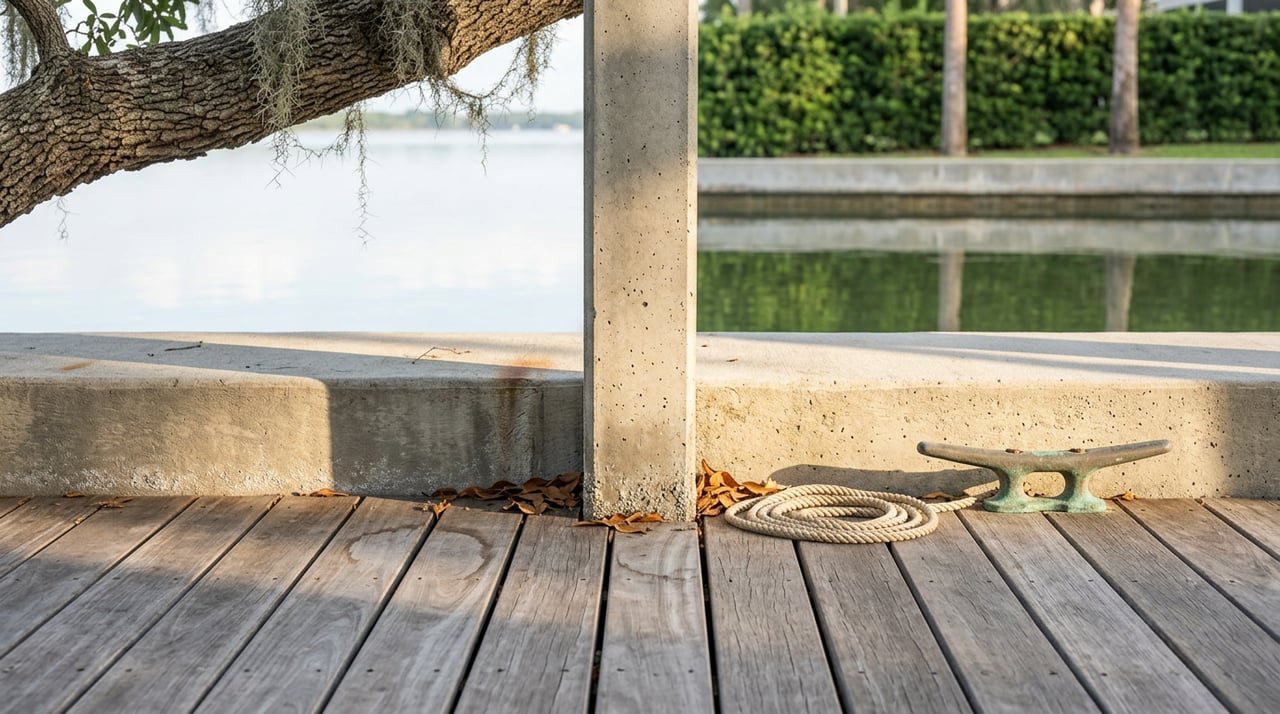
Standard home inspectors in Sarasota carry credentials for wind mitigation, wood-destroying organisms, and increasingly mold, given the area's humidity and storm history. What they typically do not carry is marine engineering training. A seawall inspection worth trusting checks for tieback corrosion, cap cracking, toe scour, soil voids behind the panel, and clogged weep holes, most of which are invisible from a dry-land walk-around and some of which require observation below the waterline. A general home inspector can tell a buyer the wall is standing. Whether it will still be standing in ten years, and what it will cost to find out, is a different question that the standard inspection contract doesn't answer.
That gap matters more on Bird Key than almost anywhere else in the market, because the island's waterfront isn't a feature, it's the entire premise. Bayfront lots on Bird Key face open water and take real wind, wave, and wake exposure, which means those seawalls work harder than a sheltered canal wall a few hundred feet away. A buyer evaluating a bayfront estate is buying a longer maintenance history than a buyer looking at an interior canal lot, whether or not either buyer realizes it.
Bird Key's Permits Don't Run Through the County
Here's a detail that trips up buyers who've shopped other Sarasota barrier islands first: Bird Key sits inside Sarasota city limits, so building and dock permits are filed with the City of Sarasota's Development Services department, not the county portal that governs Casey Key, Siesta Key's canals, and most mainland waterfront. The city also requires contractors to hold an active city registration on top of their state license, a requirement the county doesn't impose. A contractor who's done flawless seawall work on Siesta Key may not be set up to pull a permit on Bird Key without an extra registration step, and that's the kind of delay that shows up during an already-tight closing timeline.
The technical standards for the dock or seawall itself still trace back to the county's broader waterway code: a single-family dock typically qualifies for a minor work permit, while any project expanding to five or more slips triggers a major work permit and additional environmental review. For most Bird Key homeowners, that means a straightforward dock or lift replacement runs four to eight weeks, stretching to eight to twelve weeks when a Florida Department of Environmental Protection Letter of Authorization is required. A full seawall replacement, which often needs both county-level review and state authorization for work on submerged land, commonly takes three to five months from application to permit in hand. A buyer who assumes a wall can be replaced before hurricane season, because someone told them "a few weeks," is planning around the wrong timeline.
The Legal Backdrop Nobody Reads Until Something Goes Wrong
Florida law requires sellers to disclose known material defects under the standard set in Johnson v. Davis, 480 So. 2d 625 (Fla. 1985). A seawall in poor condition is generally treated as exactly that kind of material defect.
That case has been the operating rule in Florida residential sales for four decades, but it becomes specific and personal the moment a seller has actually watched water seep through a joint or seen a panel start to lean. Knowledge changes the obligation. The Florida As-Is Residential Contract for Sale and Purchase, the form used in the overwhelming majority of Sarasota transactions, gives buyers a 10 to 15 day inspection period during which they can investigate the property and, if they're unsatisfied, cancel or renegotiate. A seawall issue discovered inside that window doesn't just cost the seller money. It resets the emotional tone of a deal that, up until that point, both sides believed was settled.
The Math That Decides Who Blinks First
This is where the asymmetry lives, and it's the part of the transaction most sellers underestimate. Routine seawall repairs in the Sarasota and Manatee market run anywhere from roughly $25 to $600 per linear foot depending on the scope of work, while full replacement runs $300 to $1,200 per linear foot depending on materials and site access. Those are wide ranges, and the width itself is a clue: a wall's actual repair cost depends heavily on how early the problem is caught.
Here's the number that should change how a seller thinks about timing. When a buyer's inspector finds seawall deterioration during the contract period rather than before listing, the credit request that follows commonly runs $30,000 to $100,000 or more, often well above what the repair would have actually cost a seller who addressed it on their own schedule with their own contractor. The wall doesn't get more expensive to fix because a buyer found it. The negotiating leverage does.
A pre-listing marine inspection, which typically runs $400 to $700, is cheap insurance against that gap. It lets a seller price the property to reflect the wall's true condition, get ahead of any needed repair before it becomes a closing contingency, and hand the buyer's inspector a report that confirms rather than contradicts what's already been disclosed. For comparison, a standard home inspection in Sarasota runs $300 to $650 depending on the property and add-ons. Spending a similar amount on the one system a standard inspection doesn't actually evaluate is not a hard call once a seller sees the math.
Two Kinds of Bird Key Houses, Two Different Seawall Conversations
Bird Key's inventory splits cleanly into two categories, and the seawall means something different in each.
| 1960s original construction | Recent rebuild or major renovation | |
|---|---|---|
| Elevation | Often non-elevated, pre-dates current FEMA standards | Elevated to current FEMA requirements |
| Dock and seawall | Frequently original, condition varies widely | Typically replaced or fully refreshed |
| How it's valued | Largely on lot value; structure often becomes a teardown | Priced as a finished, turnkey product |
| Seawall's role in the deal | Determines rebuild feasibility and future cost, not habitability | Already priced in; documentation confirms the premium |
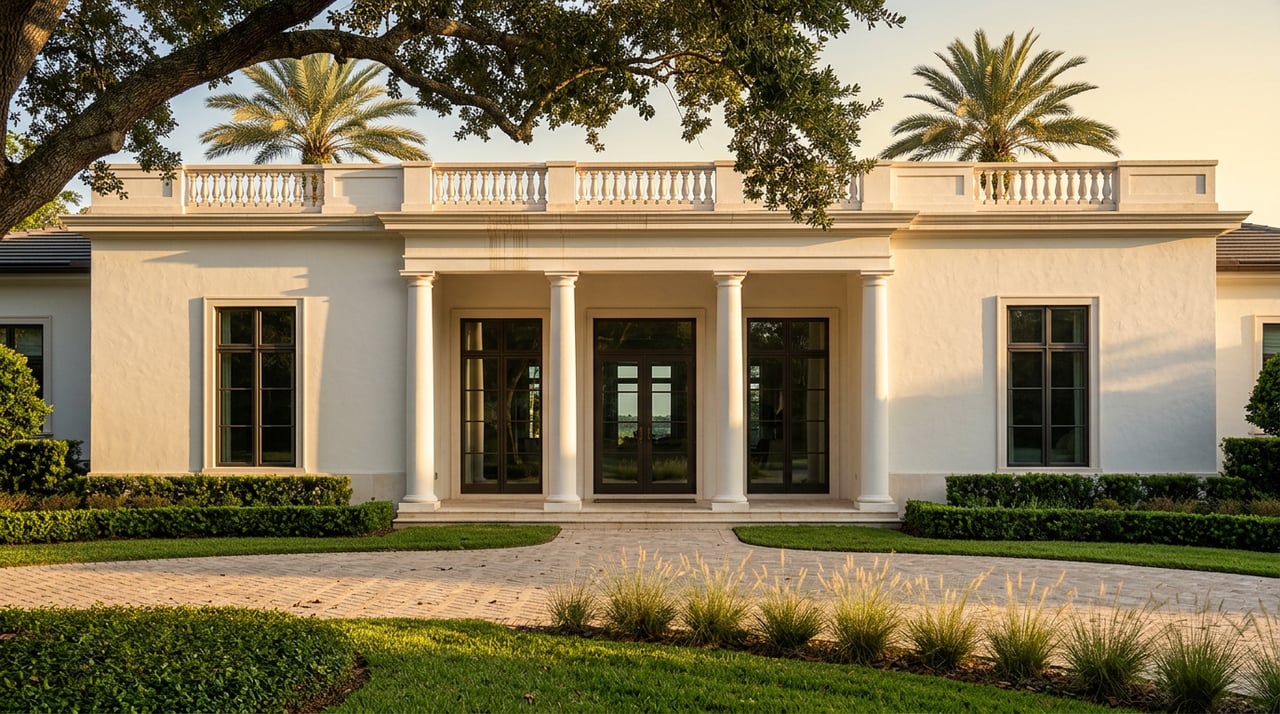
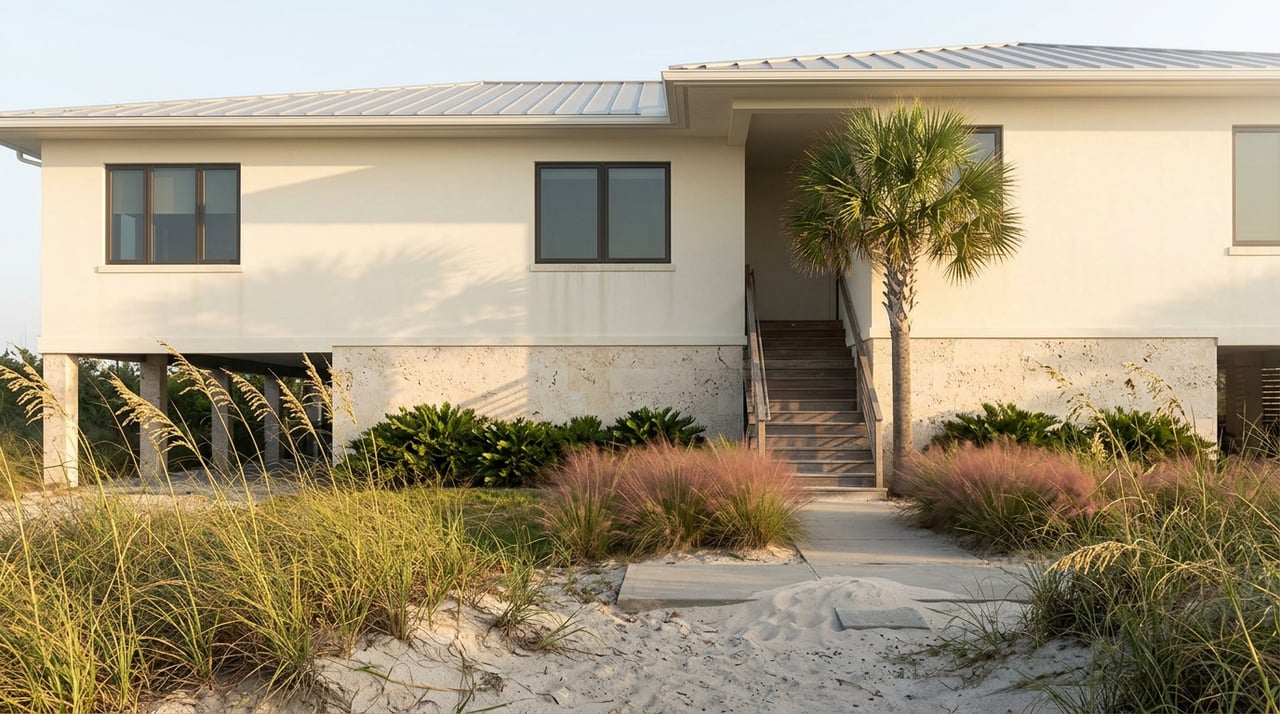
For a buyer eyeing an original ranch, the seawall's condition isn't really about whether the current owner can keep living there. It's about what the next owner will spend before they can build. For a buyer looking at a recently completed estate with a fresh dock and seawall, the condition of that marine infrastructure is part of what justifies the price gap over the ranch next door, and it deserves the same documentation scrutiny as the kitchen finishes or the pool equipment, because that's exactly what the premium is paying for.
What This Means Depending on Which Side of the Table You're On
If you're selling a Bird Key waterfront home, the practical move is to commission a marine inspection before the listing goes live, not after an offer arrives. Pull the permit history for the dock, lift, and seawall from the city's building department and confirm every permit has a recorded final inspection. An open or unclosed permit becomes the new owner's problem the moment title transfers, and remediation on an unpermitted structure can run past $15,000 once engineering and compliance costs are added in.
If you're buying, build the marine inspection into your due diligence from day one rather than treating it as optional. Ask specifically what your standard home inspector did and didn't evaluate below the waterline. And if flood zone status hasn't come up yet, ask now: most of Bird Key sits within FEMA's AE or VE special flood hazard areas, which makes flood insurance mandatory on any federally backed loan and can shift annual carrying costs by thousands of dollars depending on elevation and construction standards.
A Few Questions Worth Asking Before You Sign Anything
Does a standard home inspection cover the seawall? Generally only with a visual overview. Most home inspectors are not trained in marine construction and won't evaluate the wall's structural condition below the waterline or the dock's pilings and hardware in detail.
Who actually issues the permit, the city or the county? For Bird Key, it's the City of Sarasota's Development Services department, since the island sits within city limits. Nearby islands under Sarasota County jurisdiction, including Casey Key and Siesta Key's canal-front homes, go through a separate county portal with different contractor registration rules.
What happens if a seller doesn't disclose a known seawall problem? Under Florida's Johnson v. Davis standard, known material defects must be disclosed. A buyer who discovers an undisclosed issue after closing may have grounds to pursue the seller, which is one more reason a documented pre-listing inspection protects both sides of the transaction rather than just the buyer.
Waterfront transactions on Bird Key reward the party who did the homework first. If you're weighing a sale or a purchase on the island and want a clear-eyed read on what a specific dock, seawall, or permit history actually means for your price and your timeline, Debra Lichter at Sarasota Beach To Bay has spent decades closing exactly these deals. Schedule a Private Consultation before you list or make an offer, and get the wall's real condition on the table while you still control the conversation.