Ask most people what stands between them and a closed deal on an older Longboat Key condo and they will say the inspection. It is a reasonable guess. It is also, as of this year, the wrong one.
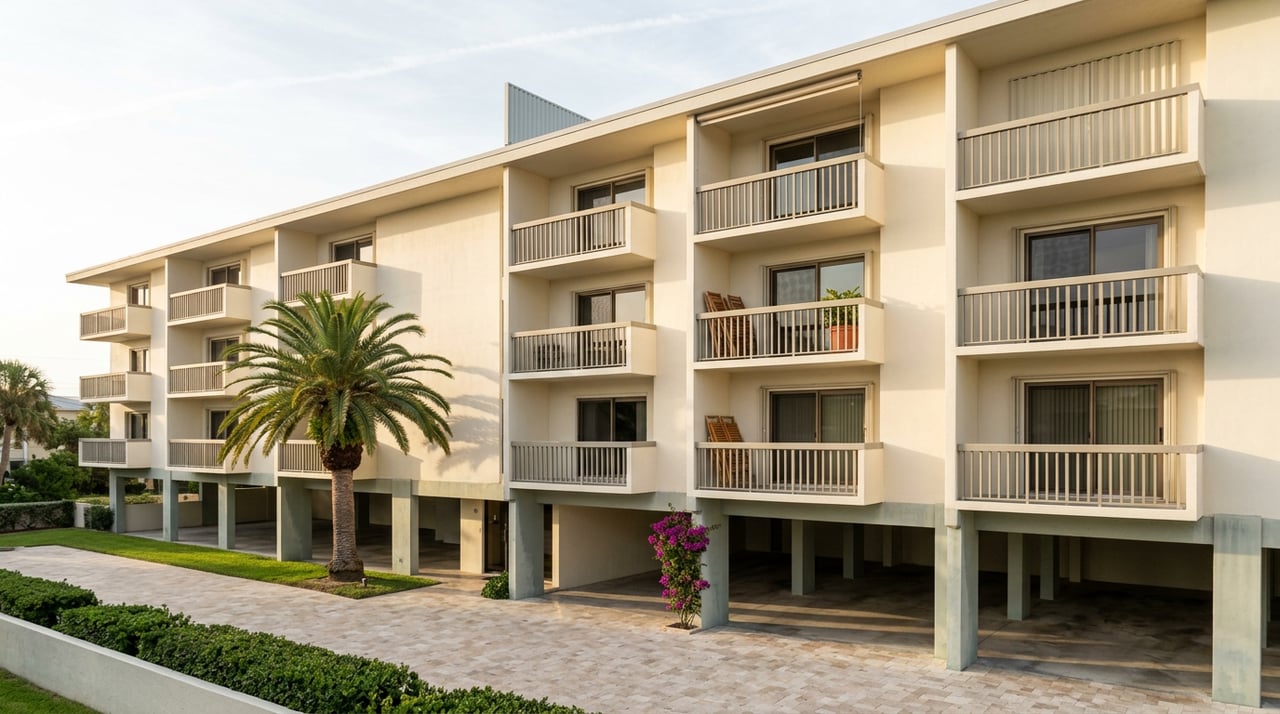
Longboat Key's building stock cleared its first round of state-mandated milestone inspections with results most residents would call reassuring. According to reporting by Your Observer, 198 buildings on the island required inspection under Florida's post-Surfside law, and only two needed the more invasive Phase Two review. The island's mid-rise inventory, buildings like Beaches of Longboat Key from 1984, Regent Place from 1995, and the 1970-era Longboat Key Towers on the south end, held up structurally. That is genuinely good news for anyone who has watched national headlines about Florida condo failures and wondered whether this island's buildings were quietly rotting from the inside.
But the inspection was never the part of this story that decides whether a deal closes. The part that decides is a second, less visible document: the Structural Integrity Reserve Study, and specifically how the association chose to fund what it found.
The Inspection Tells You the Building Is Safe. The SIRS Tells You What It Will Cost.
A milestone inspection is a structural exam. It answers one question: is this building deteriorating in a way that threatens safety. A Structural Integrity Reserve Study answers a different question entirely: has the association actually set aside the money to maintain the roof, the load-bearing structure, the plumbing, the waterproofing, and four other mandatory categories, over the building's remaining life.
Those are not the same test, and a building can ace the first while failing the second badly enough to reshape what a buyer pays.
Longboat Key's own property manager David Novak, who oversees more than 900 residential units on the island through Longboat Private Services, has put the distinction plainly in local reporting: associations that reserved responsibly all along are simply continuing what they were already doing. Associations that did not are now catching up, and the catch-up cost can be steep enough that it pushes owners to sell rather than pay it.
Mayor Debra Williams has heard the same thing from residents directly. Before the 2021 Surfside collapse, an association could vote to fund only painting, paving, and roofing, and treat everything else as optional. That option no longer exists for the eight structural categories a SIRS covers, and quarterly assessments on the island have risen accordingly.
Where the Pressure Actually Lands
This is not evenly distributed across the island. The south end of Longboat Key holds the highest concentration of condo inventory, much of it dating to the 1970s and 1980s, and that is precisely where the reserve math bites hardest. Local market analysis this year has tracked a pattern that should change how any buyer reads a listing: units in buildings that have completed their milestone inspection, finished any required repairs, and demonstrated healthy reserves are finding buyers at expected prices. Units in buildings still working through those steps are sitting longer and absorbing larger price cuts.
Here is the detail that actually matters for anyone comparing two units at different price points. A cheaper condo in a building with unresolved reserve funding can end up costing about the same each month, once you add a looming special assessment on top of the mortgage, as a pricier unit in a building that is already fully funded. The sale price is the visible number. The reserve status is the number that determines what you are really paying.
The Rule That Changed Four Weeks Before This Was Published
Here is where the ground shifted under buyers this year in a way most people on the island have not yet caught up to.
For several years, Florida law has permitted associations to use what is called Baseline Funding, a method that keeps just enough in the reserve account so the balance never technically drops below zero. It is legal. It is also the minimum an association can do while still being able to say it complies.
Fannie Mae stopped accepting that minimum on August 3, 2026. Starting on that date, an association using Baseline Funding rather than a fully funded reserve plan can find its building ineligible for conventional mortgage financing, regardless of how the unit itself is priced or how clean its milestone inspection came back.
That is a financing problem hiding inside a structural success story. A building can pass its state inspection, show no signs of deterioration, and still become difficult to finance because the board chose the cheaper reserve method the law technically still allows.
| Reserve Funding Method | Meets Florida State Law | Accepted by Fannie Mae After August 3, 2026 |
|---|---|---|
| Fully Funded (highest recommended allocation in the SIRS) | Yes | Yes |
| Baseline Funding (balance never falls below zero) | Yes | No |
The gap in that table is the whole story. Two buildings can both be legally compliant on paper. Only one of them can currently get a buyer a conventional loan.
What to Ask Before You Write an Offer
Given all of that, the useful questions on a Longboat Key condo are not about the building's age or its last coat of paint. They are about paperwork, and they should be requested in the inspection contingency period rather than assumed.
Ask for the most recent Structural Integrity Reserve Study along with its funding plan, and confirm in writing which method the association actually uses. Ask for the two most recent annual budgets and board meeting minutes, since that is where you will see whether reserve transfers and any special assessments are already scheduled. Ask whether the building's most recent milestone inspection required a Phase Two review, and if so, request that full engineering report rather than a summary. If you plan to finance, confirm with your lender directly whether the specific building's reserve method will qualify under current guidelines before your financing contingency expires, not after.
None of this is paranoia. It is simply reading the two documents that now do more to determine a deal's outcome than the property condition report ever will.
What This Means If You're Selling
The same shift that creates friction for buyers has started to create leverage for sellers who get ahead of it. Listings on the island are increasingly stating milestone inspection status and reserve funding method up front, treating full compliance as a selling point rather than fine print. A recertified building with fully funded reserves is, in effect, competing on a different axis than an uninspected one, regardless of finish level or view.
If you own in a building that has completed its SIRS on a fully funded basis, that is worth stating plainly in your listing rather than leaving a buyer's agent to dig for it. If your building is still working through Phase Two findings or hasn't finalized its funding plan, the honest move is to have those documents organized and ready before your first showing, since a well-informed buyer is going to ask for them regardless.
A Few Questions Worth Asking First
Does a passed milestone inspection mean the building is fully financeable? Not necessarily. The inspection addresses structural safety. Financing eligibility now depends separately on the reserve funding method the association has chosen, and Fannie Mae will not accept the minimum method as of August 3, 2026.
Does a unit's distance from the Gulf change which rules apply? The trigger is a building's height and age, not its exact location. Some coastal jurisdictions statewide can require inspection at 25 years instead of 30, but Longboat Key's own ordinance follows the standard 30-year threshold for buildings three stories or taller.
What if I'm already under contract on a building that hasn't finished its SIRS? Sellers are required to disclose the status of milestone inspections and reserve studies. If the study isn't final, treat that as a reason to build a longer inspection period into your contract rather than a reason to walk away automatically.
The island's buildings, on the whole, are structurally sound. The paperwork behind them is where the real due diligence now happens, and it rewards buyers and sellers who read it before anyone else asks to see it.
If you are weighing a purchase or preparing to list a condo on Longboat Key, Sarasota Beach To Bay can walk you through a specific building's inspection and reserve history before you write an offer. Schedule a Private Consultation to start that conversation.