If boating is a big part of how you live, the wrong waterfront home can create problems long after closing. On Bird Key, a beautiful view is only part of the equation because dock layout, lot type, bridge routes, and permitting can shape how easily you get on the water. If you want a home that works for your vessel and your plans, this guide will help you focus on the details that matter most. Let’s dive in.
Start With Your Boat First
When you search for a Bird Key home, it helps to begin with your vessel instead of the house features. The Bird Key Homeowners Association treats docks, lifts, mooring posts, canal incursions, and dredging as important site-plan issues. The City of Sarasota also requires Bird Key owners to submit an HOA affidavit with building permit applications.
That means a serious boating purchase should start with a practical question: Can this property support the boat you own now and the one you may own later? A waterfront lot that looks ideal from the street may not be the best fit once you review dock geometry, lift placement, and approval requirements.
Compare Canal and Bayfront Lots Carefully
Not all Bird Key waterfront homes function the same way. The HOA handbook distinguishes between canal lots and bayfront lots, and those differences matter when you are evaluating dock potential and water access. In short, one waterfront listing is not automatically interchangeable with another.
For waterfront lots, docks and pilings may not extend within 15 feet of the extended side property boundary. They also may not extend more than 20% into the width of the owner’s canal. For bayfront docks that extend into Sarasota Bay, city requirements apply.
These rules make it important to compare the actual site conditions, not just the setting or the view. A canal lot may suit one boating setup very well, while a bayfront lot may better support another. The right answer depends on your boat, your route, and what can be approved.
Why Canal Geometry Matters
Canal geometry affects how comfortably you can approach, turn, dock, and lift your boat. Even small differences in width, side setbacks, and dock placement can change day-to-day usability. For many buyers, this is one of the most important parts of the decision.
You should also keep future work in mind. The HOA handbook states that no dredging may begin until the owner obtains all applicable governmental permits. If a lot seems like it may need dredging or dock changes, that should be part of your early review, not a surprise after closing.
Put Dock Configuration at the Center
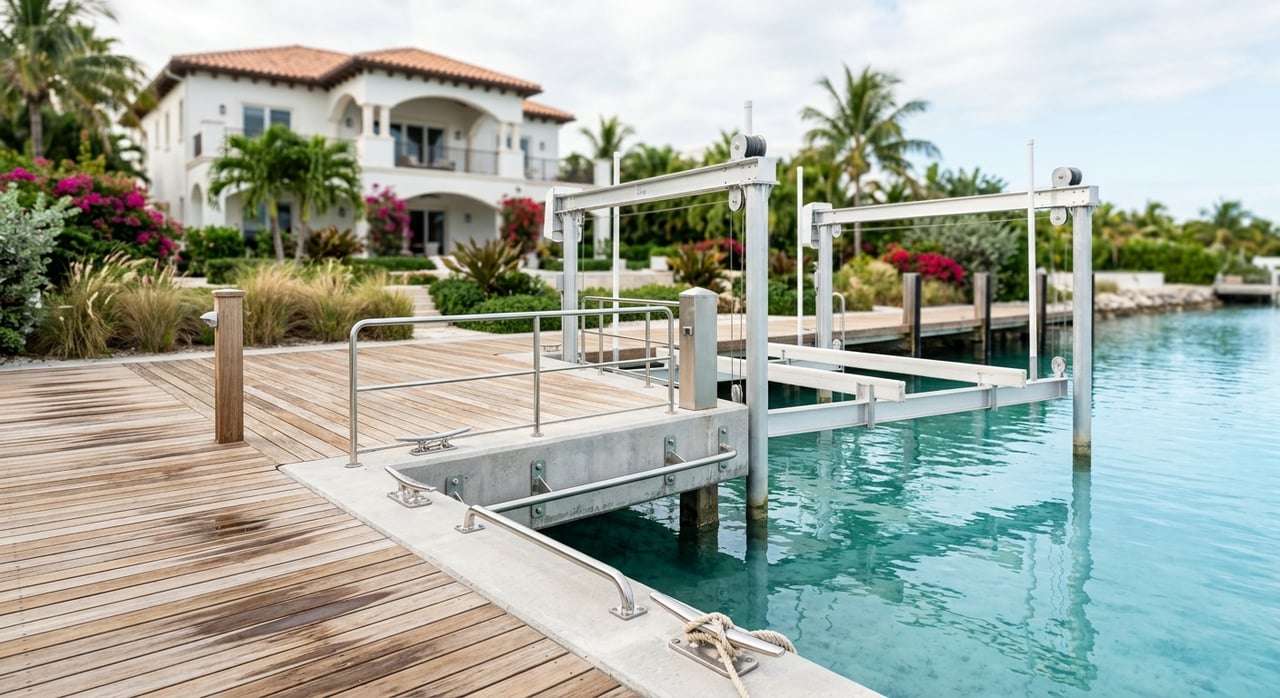
On Bird Key, dock configuration is not a minor detail. The HOA requires prior approval before construction or alteration of a dock, lift, seawall, or similar exterior feature. The City of Sarasota’s dock checklist also calls for detailed site plans, including dock length from the mean high water line and the location of lifts and boat lockers.
This is why the best dock is not always the biggest one. The best dock is the one that fits your vessel and can be approved, built, and maintained without costly redesign. That practical mindset can save time, money, and frustration.
City Requirements to Know
The City of Sarasota sets specific standards for dock construction. According to the city’s dock checklist, decking elevation is limited to 5.0 feet above mean high water, and railing height is limited to 42 inches.
For new docks or expansions, the city also requires a Florida Department of Environmental Protection letter of exemption or permit. If the project is in open water in Sarasota Bay, a signed and sealed bathymetric survey is required.
For a buyer, these rules matter because they affect what can actually be changed or expanded. If you are buying with improvement plans in mind, it is wise to evaluate those plans against the approval process before you commit.
Think Through Your Gulf Route
A Bird Key home may offer excellent water access, but your regular route matters just as much as the property itself. If you head to the Gulf often, bridge clearance and inlet conditions should be part of your search criteria from the start.
NOAA’s Coast Pilot lists the John Ringling Causeway Bridge over Sarasota Bay as a fixed bridge with 100 feet of horizontal clearance and 65 feet of vertical clearance. For many boaters, that clearance is workable. The more important question is often which inlet you plan to use most often.
New Pass vs. Big Sarasota Pass
If your boating pattern runs north toward Longboat Key, New Pass may be relevant to your route. NOAA describes New Pass as a Gulf inlet with a State Route 789 bascule bridge at the pass. The bridge has 23 feet of clearance, the channel is subject to shoaling, and local knowledge is advised.
NOAA also identifies Big Sarasota Pass as an inlet from the Gulf to the south end of Sarasota Bay. For Bird Key buyers, that can be a key planning point because your preferred inlet may influence which home feels most convenient in daily use.
A useful way to compare homes is to ask whether your vessel will routinely travel under a fixed bridge, depend on a drawbridge, or avoid bridge constraints altogether on the way to the Gulf. That simple question can quickly narrow your options.
Look Beyond the Dock
A strong boating lifestyle on Bird Key is about more than keeping your boat behind the house. Many buyers also want nearby support, club amenities, and convenient access to services around Sarasota Bay.
Bird Key Yacht Club describes itself as offering boating, social, and recreational enjoyment in a waterfront setting. Its membership materials highlight dining, tennis, a fitness center, kayaking, sailing, fishing, golf privileges, and reciprocal benefits. The club also states that you do not need to live on Bird Key to belong.
That flexibility can matter if you value club access as part of your Sarasota lifestyle. The club’s reciprocity materials also note dockage benefits at Florida Council of Yacht Clubs clubs, including complimentary first-night dockage.
Nearby Boating Support in Sarasota
NOAA’s Coast Pilot notes that Sarasota has several marinas, boatyards, and yacht basins. Local small-craft facilities offer services that can include berthage, fuel, water, ice, storage, pump-out, and launching ramps.
For many buyers, that broader support network adds confidence to a Bird Key purchase. Even if your home dock handles most daily use, it is helpful to know the surrounding area offers practical marine services nearby.
What to Request Before Closing
If you are serious about buying a Bird Key home for boating, due diligence should go well beyond a basic property tour. The local permit and approval framework makes documentation especially important.
Before closing, it is smart to request:
- Permit history
- Survey materials
- Lift capacity details
- Seawall history
- Any outstanding association approvals
These items can help you understand what has been built, what has been approved, and what issues may still need attention. In a waterfront purchase, that clarity can make a major difference.
How to Choose the Right Bird Key Home
The right Bird Key home for a serious boater is usually the one that aligns your vessel, your route, and the property’s approval path. A striking bay view may be appealing, but it should be weighed alongside lot constraints, dock layout, bridge clearance, and long-term usability.
If you approach Bird Key with those priorities in mind, you can make a more confident choice. You are not just buying a luxury waterfront address. You are choosing how smoothly your boating life will work every time you leave the dock.
If you want a private, informed look at Bird Key waterfront opportunities, Debra Lichter offers owner-led guidance for luxury coastal purchases with the hands-on attention complex boating properties often require.
FAQs
What makes one Bird Key waterfront lot different from another for boaters?
- Bird Key distinguishes between canal lots and bayfront lots, and the rules for docks and waterfront improvements can differ based on the lot type.
What should buyers review about a Bird Key dock before purchasing?
- Buyers should review dock configuration, permit history, lift capacity, survey materials, seawall history, and any outstanding association approvals.
Does the John Ringling Causeway Bridge limit boating from Bird Key?
- NOAA lists the bridge as a fixed bridge with 65 feet of vertical clearance and 100 feet of horizontal clearance, so the bigger route question is often which inlet you will use regularly.
Why does New Pass matter when buying a Bird Key boating home?
- NOAA says New Pass has a bascule bridge with 23 feet of clearance and notes that the channel is subject to shoaling, so it can affect route planning for some vessels.
Do you have to live on Bird Key to join Bird Key Yacht Club?
- No. The club states that membership is available even if you do not live on Bird Key.